
Salesforce OmniStudio is a powerful low-code toolkit that helps you build guided user experiences, automate complex processes, and integrate data across systems — all within Salesforce. It was initially developed by Vlocity, and later acquired by Salesforce and is rebranded as OmniStudio. It’s widely used in industries like Telecom, Insurance, Healthcare, and Public Sector to deliver fast and scalable digital experiences.
What Is Salesforce OmniStudio?
Salesforce OmniStudio is a suite of declarative tools designed to create dynamic, data-driven applications without heavy custom coding. It enables developers and consultants to build reusable UI components and backend logic that work seamlessly together. It simplifies and accelerates digital transformation so your organization can be more agile, flexible, and ready to meet any challenge.
Key Highlights
- Low-code, configuration-driven development
- Guided user journeys and interactive UI
- Fast data integration with Salesforce and external systems
- Reusable, modular architecture
Why Should New Implementers Learn OmniStudio?
OmniStudio allows teams to:
- Build solutions faster than traditional Apex-based development
- Reduce maintenance with reusable components
- Improve performance using server-side processing
- Deliver consistent experiences across web and mobile
For new implementers, OmniStudio provides an excellent balance between flexibility and speed.
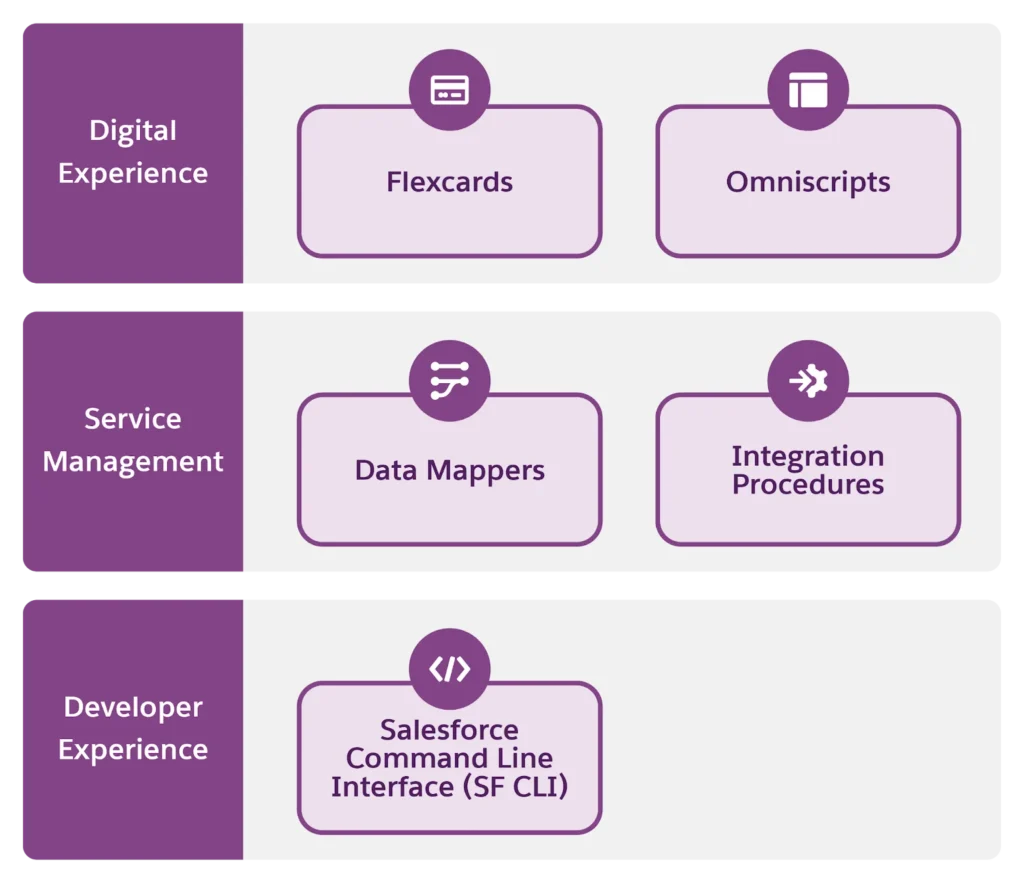
Core OmniStudio Components
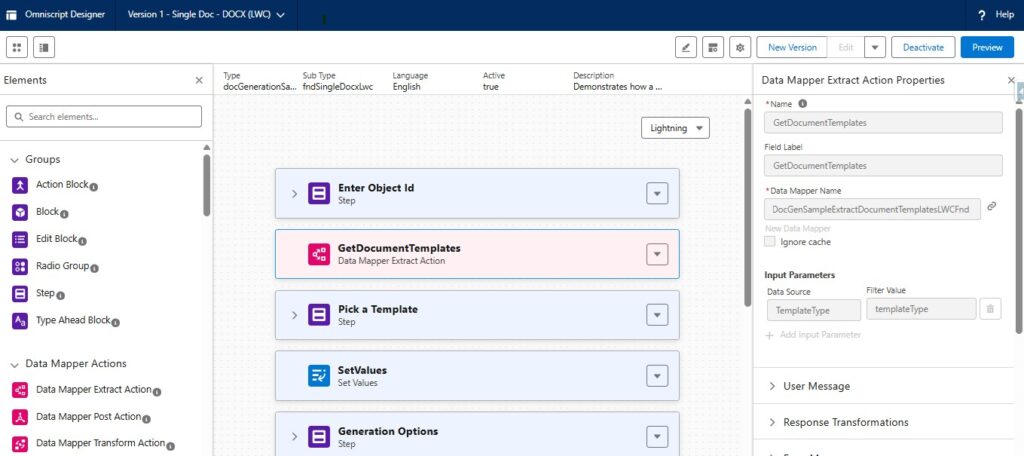
OmniScripts
OmniScripts facilitates to create guided, step-by-step user flows for complex business processes such as onboarding, quoting, or service requests. They support conditional logic, validations, and backend actions.
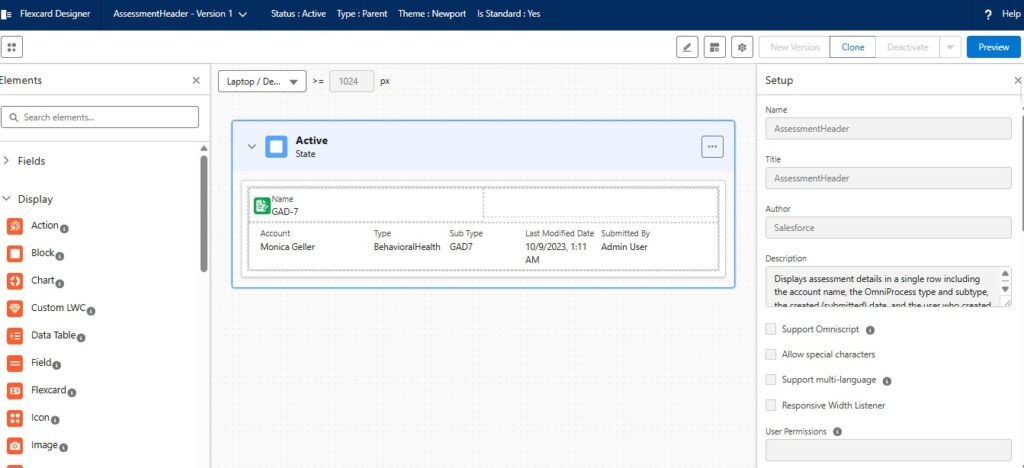
FlexCards
FlexCards are dynamic UI cards that display contextual data and actions. They are responsive, reusable, and often used in dashboards or console views. They are used to display contextual information and actions in an at-a-glance format for customer.
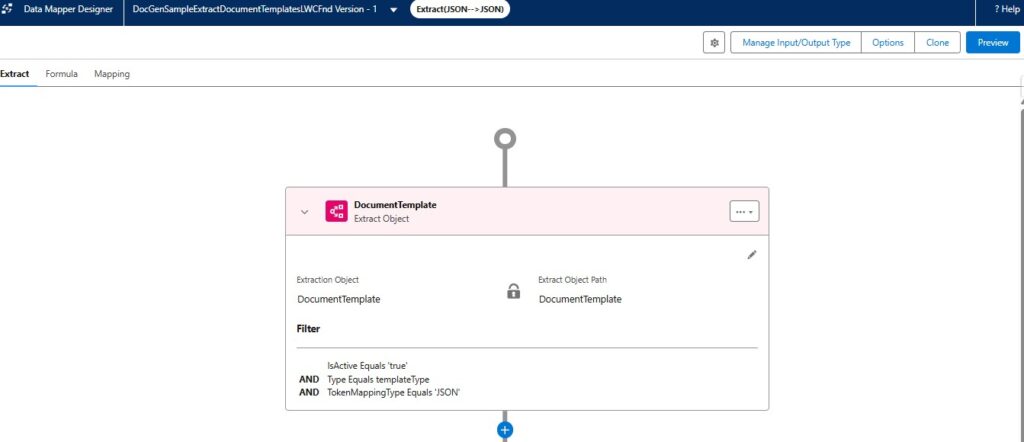
DataRaptors
DataRaptors extract, transform, and load data between Salesforce and OmniStudio components. They handle data mapping and JSON transformations with minimal configuration.
| DataMapper Type | Objective |
| DataMapper Turbo Extract | Retrieve data from a single Salesforce object type and includes fields from related objects. |
| DataMapper Extract | Retrieve data from a one or more Salesforce object |
| DataMapper Load | Write data to one or more Salesforce objects |
| DataMapper Transform | Manipulate intermediate data without reading from or writing to Salesforce objects |
Integration Procedures
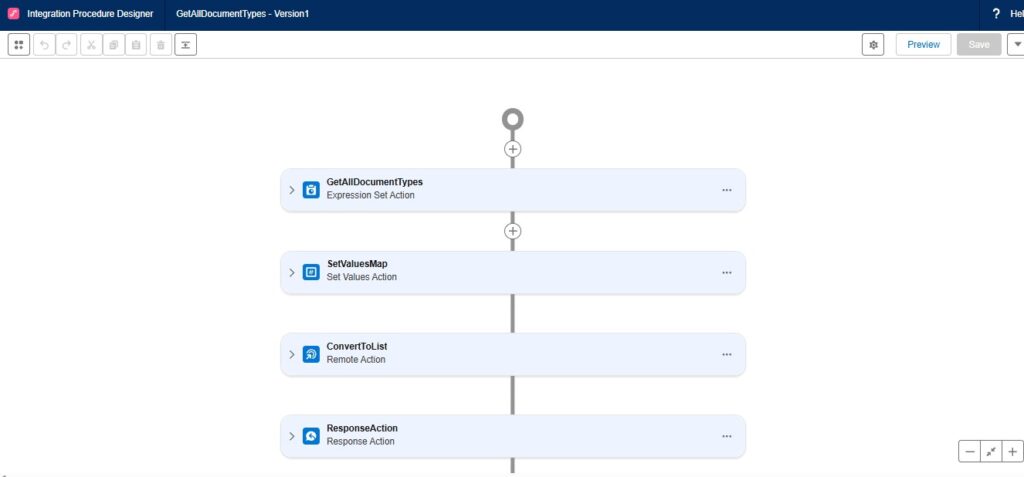
Integration Procedures run server-side logic to perform multiple actions in one call. They improve performance by reducing client-server round trips and are ideal for complex integrations.
Use Integration Procedures when no user is interaction required during the execution, and you want to:
- Retrieve, transform, and send data between Salesforce and external systems
- Offload processing to the server to improve performance and scalability
- Bundle multiple operations in a single server transaction
- Enable data caching for frequently accessed information
Salesforce CLI
It is a Salesforce standard deployment tool used to move Omnistudio component changes such as Omniscripts, Flexcards, Integration Procedures, and Data Mappers between environments.
Other migration tool(Deprecated)
- IDX Build Tool
- IDX Workbench
How OmniStudio Components Work Together
A typical OmniStudio flow looks like this:
- A FlexCard displays key information
- An OmniScript guides the user through a process
- An Integration Procedure fetches or updates data
- DataRaptors transform data for UI or backend use
This architecture ensures scalability and high performance.
Common Use Cases
- Customer onboarding and intake flows
- Service agent consoles
- Document Generation using templates
- Order management and provisioning
- Industry-specific guided processes
Getting Started: Tips for New Implementers
- Learn OmniScripts and DataRaptors first
- Use Integration Procedures for better performance
- Keep designs modular and reusable
- Start with simple use cases before adding complexity
- Practice using Salesforce Trailhead modules
Conclusion
Salesforce OmniStudio empowers implementers to build enterprise-grade digital experiences quickly and efficiently. By mastering its core components, new implementers can deliver scalable, high-performance solutions without relying heavily on custom code.