
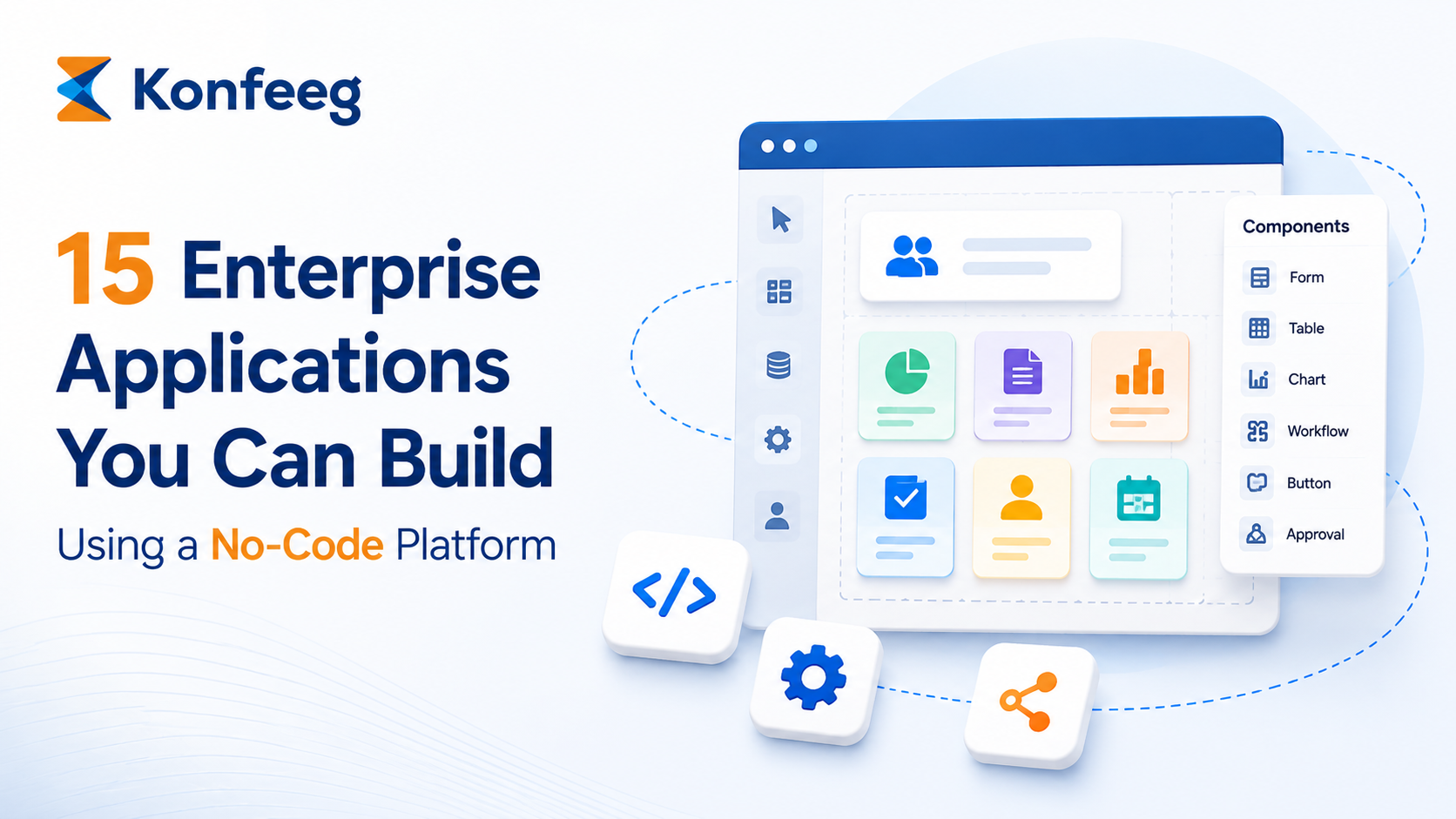
For years, building enterprise software meant hiring developers, managing long implementation cycles, and investing heavily in custom development. Even small business applications often required months of planning, coding, testing, and deployment.
That model is changing.
Modern no-code platforms enable organizations to create enterprise-grade applications through visual development, configurable workflows, and reusable components. Instead of waiting months for software, business teams can launch applications in weeks while maintaining governance, security, and scalability.
The result is faster digital transformation without compromising enterprise standards.
Here are fifteen enterprise applications organizations can build using a modern no-code platform.
1. Human Resource Management System (HRMS)
Every growing organization needs a centralized HR system to manage employee records, attendance, leave, onboarding, performance, and organizational structure.
A no-code HRMS allows businesses to configure workflows that match their HR policies instead of forcing them into rigid software processes.
Konfeeg Module: K-HRMS
2. Employee Self-Service Portal
Employees should be able to access payslips, apply for leave, submit requests, update personal information, and track approvals from one place.
A self-service portal reduces administrative workload while improving employee experience.
Konfeeg Module: Employee Portal
3. Customer Relationship Management (CRM)
Every sales organization needs visibility into leads, opportunities, customers, follow-ups, and sales performance.
A configurable CRM allows organizations to align sales workflows with their own business processes rather than adapting to generic software.
Konfeeg Module: K-CRM
4. Contract Lifecycle Management
Managing contracts through emails and spreadsheets increases business risk.
A no-code Contract Lifecycle Management solution centralizes contract creation, approvals, renewals, compliance tracking, and document storage.
Konfeeg Module: K-CLM
5. Project/Portfolio Management System
Project execution requires collaboration across teams, tasks, milestones, budgets, timelines, and resources.
A configurable project management application helps organizations standardize delivery while remaining flexible enough for different project types.
Konfeeg Module: KPMS
6. Incident Management System
Operational incidents, workplace issues, customer complaints, safety events, and IT disruptions require structured reporting and resolution workflows.
A no-code Incident Management System ensures every incident is tracked, investigated, assigned, and resolved through standardized processes.
Konfeeg Module: KIMS (Konfeeg Incident Management System)
7. Concrete Quality Control System
Concrete plants rely on consistent quality to maintain compliance and customer trust.
A specialized application can manage mix designs, testing parameters, batch records, quality inspections, and reporting.
Unlike generic no-code examples, this demonstrates how industry-specific applications can also be built on the same platform.
Konfeeg Module: KKC
8. Agriculture Management Platform
Agriculture businesses require digital tools for crop planning, operations management, field activities, resource utilization, and production monitoring.
Instead of relying on multiple disconnected tools, organizations can manage agricultural workflows on one configurable platform.
Konfeeg Module: K-Agritech
9. Dairy Farm Management
Managing livestock, milk production, feeding schedules, breeding records, veterinary activities, and farm operations requires specialized software.
A no-code platform allows dairy businesses to digitize these operations while adapting workflows to their own practices.
Konfeeg Module: KDF
10. Dairy ERP
As dairy businesses grow, operational requirements extend beyond farm management to procurement, processing, inventory, distribution, and business operations.
A dedicated Dairy ERP helps streamline the entire value chain.
Konfeeg Module: K-Dairy ERP
11. Textile ERP
Textile manufacturers manage production planning, inventory, orders, procurement, quality, and dispatch across multiple business functions.
A configurable ERP provides greater flexibility than traditional industry software.
Konfeeg Module: K-Textiles
12. Employee Wellness Platform
Employee well-being has become an important part of workplace culture.
Organizations can build wellness applications that support health initiatives, employee engagement, wellness programs, assessments, and internal communication.
Konfeeg Module: K-Wellness
13. Partner Collaboration Portal
Modern enterprises collaborate with distributors, suppliers, dealers, and strategic partners.
A centralized partner portal improves communication, document sharing, approvals, onboarding, and collaboration while maintaining secure access.
Konfeeg Module: K-Partner Hub
14. Vendor Approval & Procurement Workflow
Procurement often depends on email chains, spreadsheets, and manual approvals.
A no-code procurement workflow enables organizations to automate vendor onboarding, purchase requests, approval hierarchies, and procurement tracking without lengthy development cycles.
This is an example of a custom application that can be built on the Konfeeg platform.
15. Custom Business Applications
Every organization has unique processes that commercial software cannot fully address.
Whether it’s compliance tracking, audit management, asset management, visitor management, approval systems, internal portals, or entirely new operational workflows, a no-code platform enables enterprises to build applications tailored to their exact business requirements.
This is where no-code delivers its greatest value. Instead of searching for another software product, organizations build what they need.
Why Enterprises Are Moving Toward No-Code Platforms
The value of no-code extends beyond faster application development.
Organizations benefit from:
- Faster deployment of business applications
- Lower development costs
- Reduced dependency on software vendors
- Standardized business processes
- Easier maintenance and enhancements
- Improved collaboration between business and IT teams
- Faster response to changing business requirements
Rather than investing in separate software for every department, enterprises gain the flexibility to build applications as their needs evolve.
Konfeeg. One Platform. Unlimited Possibilities.
Most organizations don’t struggle because they lack software.
They struggle because they have too much of it.
Every new business requirement shouldn’t trigger another software purchase. It should become another capability built on an existing platform.
Konfeeg brings together enterprise functions and industry-specific operations on a unified no-code platform. From HR and CRM to contract management, project delivery, incident reporting, agriculture, dairy, textiles, concrete quality control, employee engagement, and partner collaboration, businesses can manage diverse operations without maintaining a fragmented technology stack.
As new requirements emerge, organizations simply build the next application on the same platform. That’s the real advantage of enterprise no-code.
Conclusion
The future of enterprise software isn’t about owning more applications. It’s about having the flexibility to create the right ones when your business needs them.
A modern no-code platform empowers organizations to digitize processes, accelerate innovation, and reduce technology complexity without extensive coding or long implementation cycles.
Whether you’re replacing legacy systems, automating workflows, or building entirely new enterprise applications, Konfeeg provides a scalable foundation for continuous innovation.
Experience the endless enterprise possibilities with Konfeeg. Start your free trial. Email:hello@konfeeg.com